Australian lithium miners slide as CATL moves toward mine restart
Chinese authorities have green-lit reserve reports from two major lithium producers operating in the mining hub of Yichun.
Shares of lithium producers in Australia slumped after Chinese regulators approved reserve reports for two major projects in Yichun, easing fears of prolonged supply disruptions.
Liontown Resources tumbled as much as 10.6% at close in Australia, while Pilbara Minerals shed 6.3%.
The declines followed Bloomberg reports that Contemporary Amperex Technology Co. Ltd. (CATL) secured approval for a reserve report at its Jianxiawo mine in Jiangxi province. Operations at the site have been suspended since August, after the battery giant failed to renew an expired mining permit. The approval brings CATL closer to a potential restart, though no timeline has been confirmed.
Separately, Gotion High-Tech Co. Ltd., which continued operating through the period, also received reserve approval from China’s Ministry of Natural Resources. Gotion further disclosed that its mining design and ecological restoration plans have been cleared, granting it discretion to adjust production.
The approvals came after authorities in Yichun required eight producers to submit updated reserve data, following an audit that flagged compliance gaps. The lithium hub has been under intense scrutiny in recent months, with licensing delays raising fears of supply shortfalls.
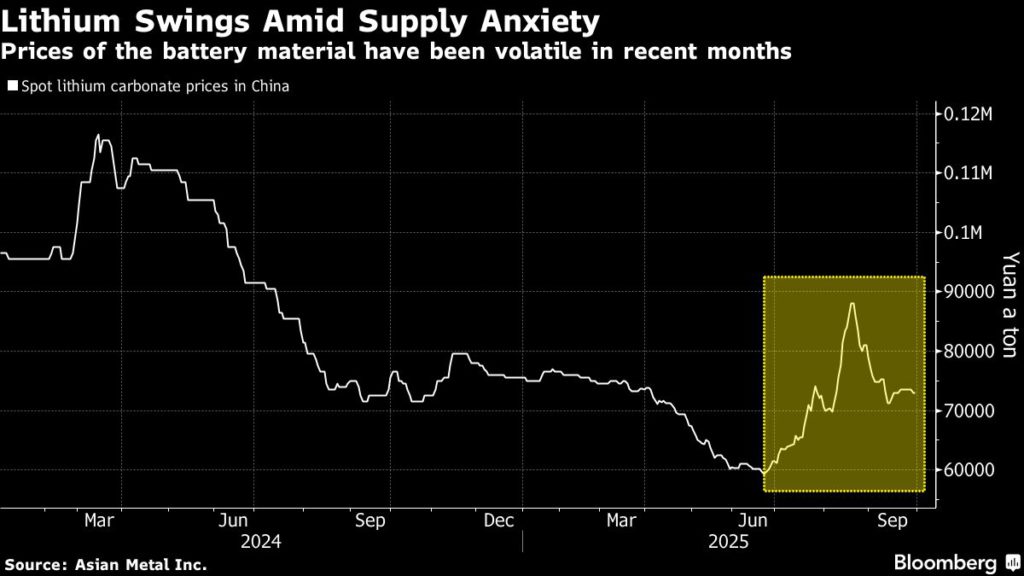
Despite the regulatory progress, the broader market remains weighed down by oversupply and slowing electric vehicle demand. CRU Group estimates that lepidolite output from Yichun could have accounted for 11% of global supply this year, but disruptions and inspections have fueled sharp swings in lithium prices.
“The anecdotal reports we’re hearing suggest a constructive and market-conscious stance from the ministry,” said Martin Jackson, head of battery raw materials at CRU. “Ultimately, we always anticipated a pragmatic approach to these licensing issues from Beijing.”
(With files from Bloomberg)